Close to the five-year mark in my last job, I started to think hard about what type of company I would work for next if I didn't start another business.
I'd held roles in operations, marketing and product. I really enjoyed product work and initially had strong conviction about staying in the discipline, but the more I reflected on my career, the more I realized that the product itself was most important to me. Roles change, but I thrive when the core value of the product is deep and durable.
With that in mind, I applied to two companies.
Vercel, where I work now1, was hiring. The other, Raycast2, wasn't, but I applied anyways.
If you want to skip the back story, you can see the site here.
A concept publication as a job application
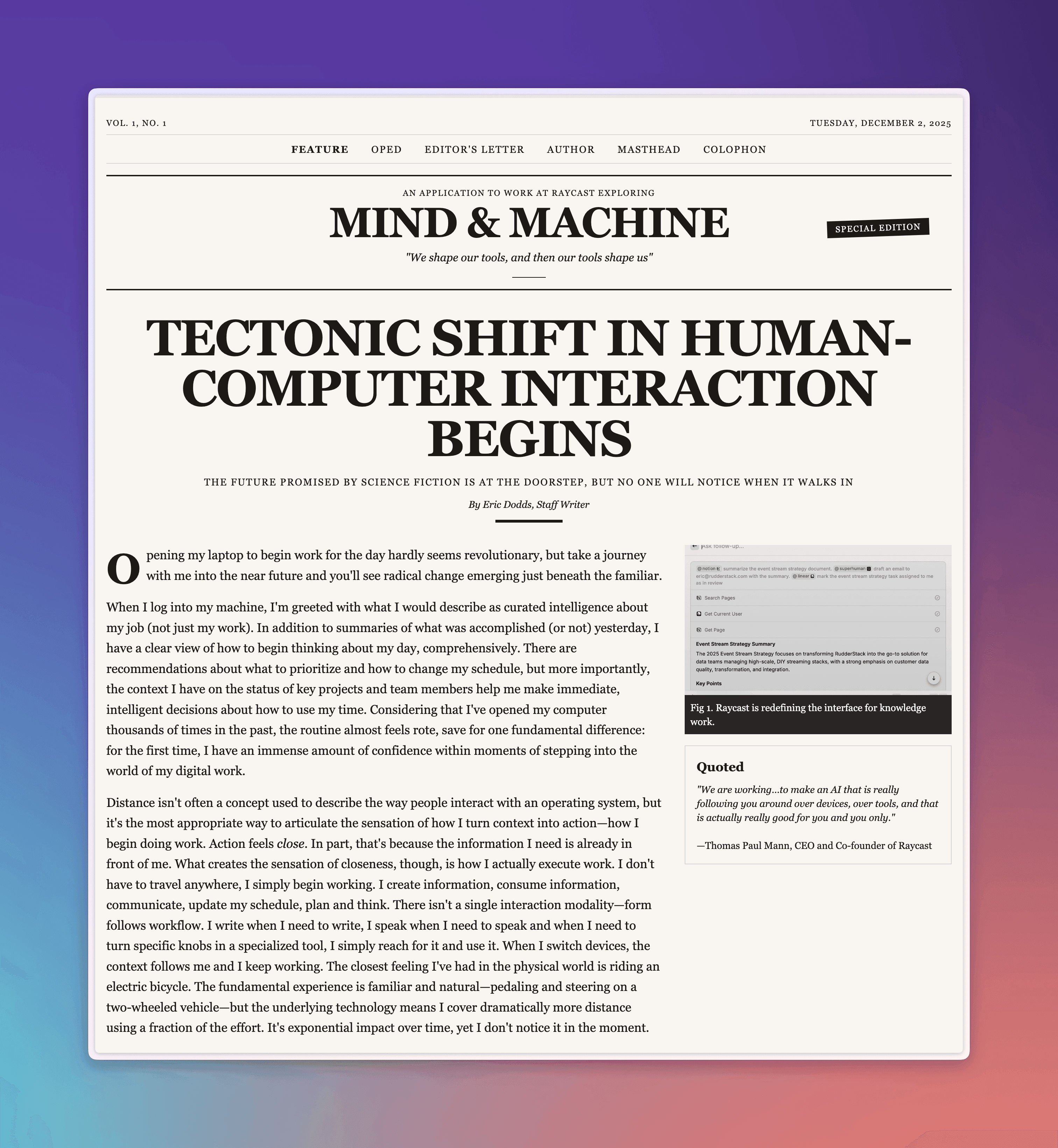
Because Raycast wasn't hiring, I knew I needed to do something to stand out. Here's what I wrote in the colophon of the application3:
I cycled through several ideas, but kept coming back to the concept of a print-inspired newspaper. Not only does a traditional newspaper publishing essays about AI and human-computer interaction create a noticeable contrast, but journalistic writing seemed like a good form factor for communicating my ideas.
Ultimately, I wanted to demonstrate to the Raycast team that I was thinking very deeply about both their product and the larger landscape of how AI is changing the way we interact with computers.
I sent the application to several friends (including someone in product at Linear) and the responses were polarizing. People either loved it or thought it was a bad idea, which reinforced to me that I was striking the right chord.
Structurally, the format worked better than I initially expected. Here's the breakdown of sections:
- Journalistic feature piece focused on Raycast's opportunity
- Op-ed with some hot(ish) takes on the future of AI
- Letter from the editor (where I directly addressed the Raycast team)
- About the author (my resume)
- Colophon (where I described the process of creating the application)
As a sidenote, the op-ed piece included the following line, which, after discovering Zo Computer4 last week, feels even more relevant:
The ultimate battleground for AI isn't foundational models, distribution moats, or interfaces. It is the computer itself.
Tracking views of the application
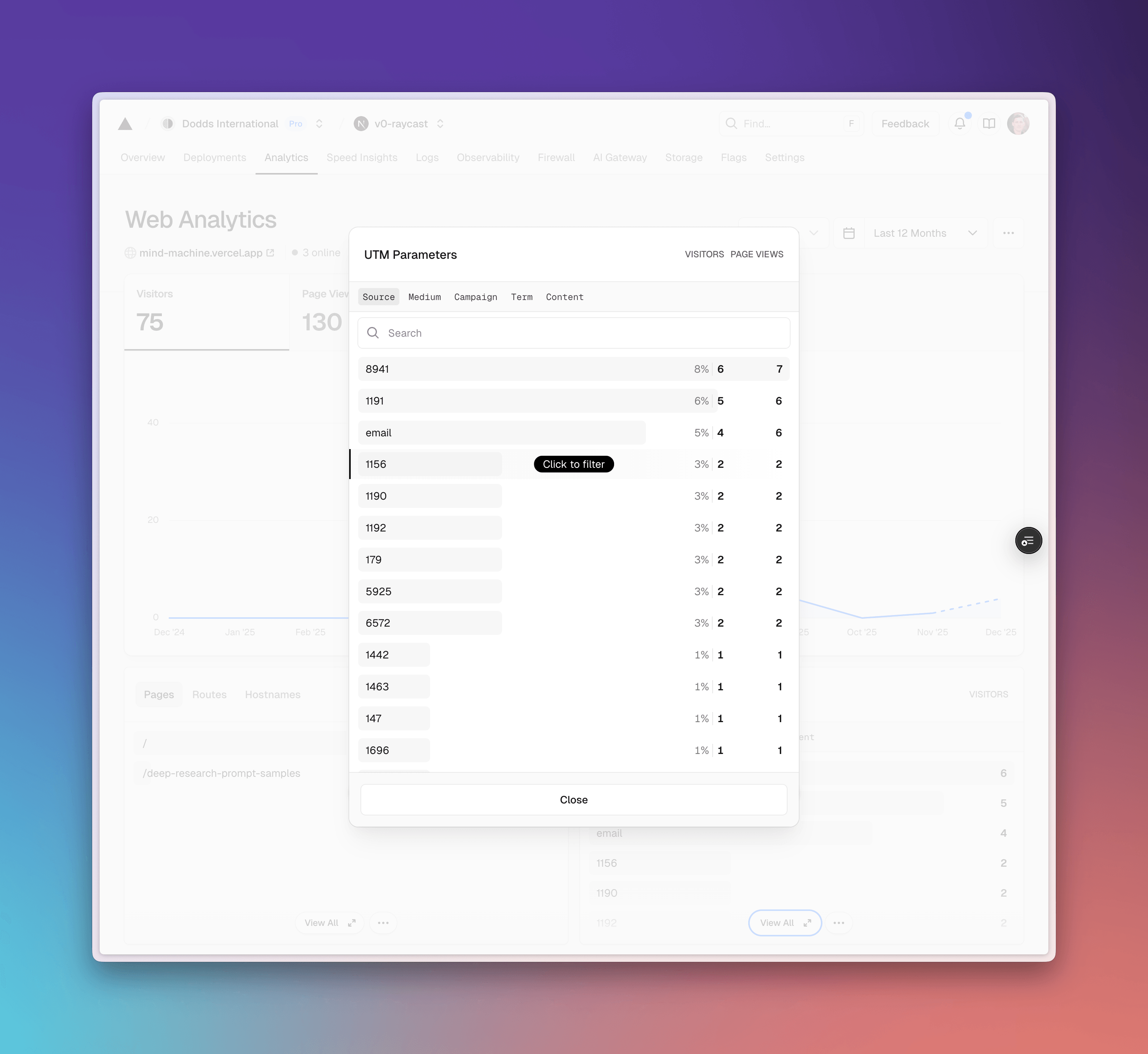
I submitted the application through a few channels (direct email, website) and wanted to be able to see if anyone was looking at it and, if so, who they were.
This was pretty simple with UTM parameters and Vercel Analytics. I created a very simple tag taxonomy for the URL with unique IDs for each channel:

When people clicked on the link, I could see their visits in my Vercel project:
A response from the Raycast founders
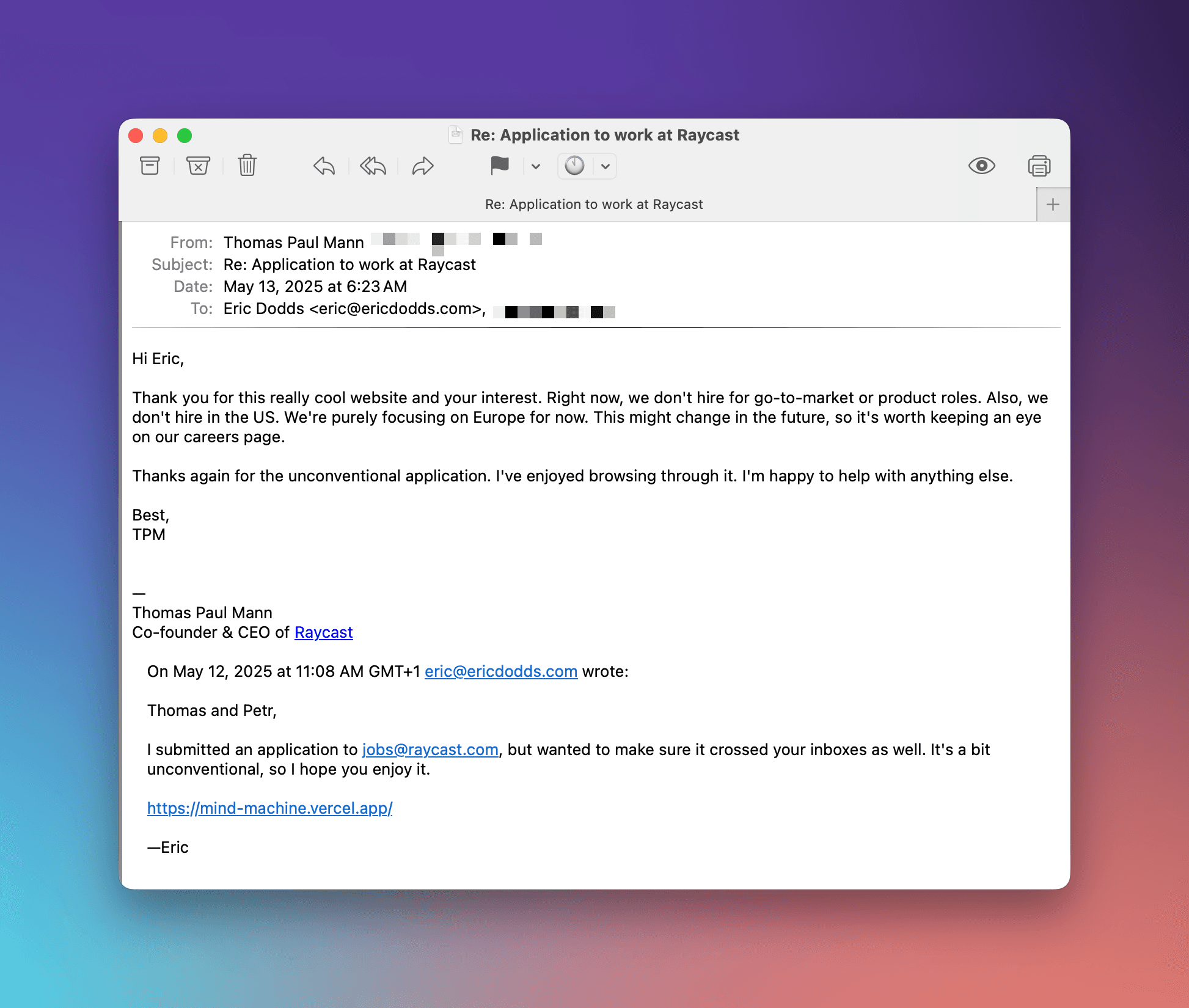
By now you know that I didn't get a job (which led me to Vercel), but I did get a response from one of the founders, Thomas Paul Mann5.
View the commit history for this post on GitHub
Join almost 3,000 subscribers via Substack to get notified about new posts.
Footnotes
-
You can read about my journey from RudderStack to Vercel in this post. ↩
-
Raycast is an extremely powerful productivity tool and one of the best pieces of software I've used in the past decade. ↩
-
You can see the full application, called Mind & Machine, here. ↩
-
Zo Computer is a personal, AI-powered computer in the cloud. You can learn more on their site. ↩
-
Thomas Paul Mann is the co-founder and CEO of Raycast. You can follow him on X. ↩